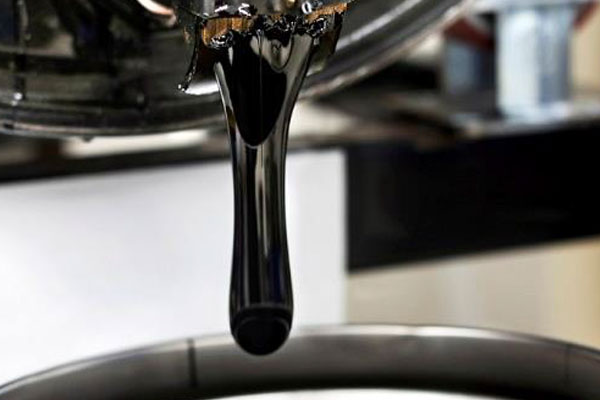
Bitumen
Bitumen, also commonly yet mistakenly known as Tar or Asphalt, is the residual section, and the heaviest part of the crude oil. It has the highest boiling point and therefore, remains at the bottom of the fractions of the crude oil. It is black in color, sticky and thick. This thickness of the bitumen does not allow it to flow smoothly and thus, makes it a very viscous semi-solid.
Properties and Uses of Bitumen
It is expected that the global demand for bitumen will continually rise at a rate of 3.6% through 2018. Developed countries like the USA were the largest consumers of bitumen but now with a focus on infrastructural development, developing countries in Asia will take over as the growing markets for bitumen.
The wide variety of bitumen properties makes it an excellent material of use in multiple industries, including the construction industry. Here is how and why bitumen is used throughout the globe for a multitude of purposes:
Paving Roads:
Bitumen’s viscous and heavy load resistant properties allow asphalt, used in the construction of roads, to be flexible and durable. The bitumen’s elasticity also helps roads survive the extreme temperature and weather changes.
Roofing:
Bitumen’s ability to withstand structural movements and its waterproof capabilities make it an excellent choice of material to be used for roofing. Around 95% of the global bitumen demand is for paving roads and roofing. The remaining 5% comprises of a number of mentioned and more secondary applications.
Forms of bitumen
Following are the usual forms of bitumen:
- Bitumen Emulsion: It is a liquid product containing bitumen to a great extent in an aqueous medium. The bitumen is in a very finely divided state and it is suspended in the aqueous medium with the help of some suitable stabilizing agents.
- Blown Bitumen: It is a special type of bitumen which is obtained by passing air under pressure at a higher temperature. Such bitumen can be used as roofing & damp-proofing felts, in the manufacturing of pipe asphalts & joint fillers, as heat insulating material, etc.
- Cut-back bitumen: It is obtained by fluxing asphaltic bitumen in presence of some suitable liquid distillates of coal tar or petroleum. It can be applied cold as bitumen paint.
- Plastic bitumen: It consists of bitumen, thinner and suitable inert filler. The amount of inert filler is about 40% to 45%. It is used for filling cracks in masonry structures, for stopping leakages, etc.
- Straight run bitumen: When the bitumen is being distilled to a definite viscosity or penetration without further treatment, it is known as the straight run bitumen.
Similarities between Bitumen and Tar
Bitumen and tar are both viscous dark organic liquids which seep out of the ground. They are also both used as waterproofing and sealing agents in the construction of boats and buildings. They also both have medicinal uses.
Differences between Bitumen and Tar
Although there are many similarities, there are some differences between bitumen and tar. They include the following.
Composition:
Bitumen is primarily composed of aromatic hydrocarbons associated with oil deposits. Tar, on the other hand, can form in association with oil or it can be formed from wood.
Characteristics:
Bitumen can occur in solid form or as a dark viscous liquid whereas tar is chemically distinct and occurs primarily as a viscous liquid.
Production:
Bitumen occurs naturally and can be prospected from the ground whereas tar is usually produced through distillation.